
The Technical & Regulatory Imperative of Washer Disinfector Validation
In modern sterile processing departments (SPD), central sterile supply departments (CSSD), and medical device manufacturing environments, automated cleaning via washer disinfectors serves as the foundation of infection prevention. Before any reusable medical device—ranging from complex orthopedic drill guides and flexible endoscopes to micro-surgical scissors—can undergo terminal sterilization, it must be thoroughly cleaned and thermally disinfected. Debris, proteinaceous deposits, organic soil, and residual bioburden physically block sterilizing agents (such as steam, ethylene oxide, or vaporized hydrogen peroxide) from contacting underlying substrates. Consequently, inadequate cleaning results in catastrophic sterilization failures, healthcare-associated infections (HAIs), and regulatory rejections.
Washer Disinfector Validation is the quantitative, documented empirical process establishing that an automated washer disinfector consistently delivers reproducible cleaning and thermal disinfection performance under worst-case operational parameters. Global regulatory frameworks, led by the International Organization for Standardization (ISO) under the ISO 15883 standard series, the FDA’s 2015 Guidance on Reprocessing Medical Devices in Health Care Settings, and AAMI ST79, demand rigorous, verifiable validation methodologies. C.G. Laboratories, Inc. provides medical device Original Equipment Manufacturers (OEMs) and healthcare systems with authoritative, ISO 13485-certified laboratory testing services to validate automated cleaning processes and establish rock-solid Instructions for Use (IFU).
Information Gain Insight: The Core Science of Automated Reprocessing Efficacy
Automated washer disinfectors operate through four interdependent variables, frequently referred to as the Sinner Circle of decontamination:
- Mechanical Action: Fluid dynamics, spray arm impeller pressure, flow velocity, and jet impingement designed to shear organic soils from device surfaces and internal lumens.
- Chemical Dynamics: Detergent formulation, enzymatic cleavage efficiency, pH balance, and surfactant tension reduction optimized to dissolve proteins, lipids, and carbohydrates without degrading metallic or polymer substrates.
- Thermal Kinetics ($A_0$ Value): The precise application of heat over time to achieve non-sporicidal microbial lethality, quantified via standard $A_0$ lethal energy calculations.
- Process Time: Exposure durations for pre-wash, main wash, neutralizer rinsing, thermal disinfection, and forced-air drying phases.
A failure in any one parameter must be compensated by another; validation quantitatively defines these operating boundaries to guarantee consistent cleanliness.
Navigating the ISO 15883 Standard Series: A Technical Breakdown
Achieving compliance requires a deep understanding of the regulatory landscape governing washer disinfectors. ISO 15883 is divided into several parts, each specifying distinct requirements for machine engineering, cycle verification, and soil challenge testing:
ISO 15883-1: General Requirements
Outlines basic safety, operational parameters, process monitoring instrumentation, and overall performance requirements for all washer disinfectors regardless of application.
ISO 15883-2: Surgical Instruments
Mandates specific thermal disinfection parameters ($A_0 \ge 600$ or $3000$) and cleaning performance tests for washer disinfectors handling surgical instruments, rigid endoscopes, and re-usable medical equipment.
ISO 15883-5: Test Soils & Methods
Defines international test soils, inoculation techniques, worst-case sampling protocols, and analytical detection methods (e.g., protein residual quantification) for demonstrating cleaning efficacy.
Thermal Disinfection Kinetics: Understanding and Calculating the $A_0$ Value
Thermal disinfection in washer disinfectors relies on temperature over exposure duration to achieve specified logarithmic reductions in microbial populations. Under ISO 15883-2, thermal lethality is expressed as the $A_0$ value, calculated using the following mathematical integral:
$$A_0 = \int 10^{\frac{T - 80}{z}} \, dt$$
Where $T$ is the temperature in degrees Celsius (°C), $t$ is the exposure time in seconds, and $z$ is the temperature coefficient (conventionally assigned a value of 10°C for vegetative microorganisms). In practical laboratory and clinical validation, two primary $A_0$ benchmarks exist:
| Target $A_0$ Level | Equivalent Thermal Exposure | Microbiological Efficacy Range | Clinical Application Spectrum |
|---|---|---|---|
| $A_0 = 600$ | 90°C for 60 seconds (or 80°C for 10 minutes) | Destroys vegetative bacteria, yeasts, and heat-sensitive enveloped viruses (e.g., HIV, HBV). | Non-critical medical devices and surgical items not exposed to high-risk, heat-resistant pathogens. |
| $A_0 = 3000$ | 90°C for 5 minutes (or 93°C for 2.5 minutes) | Eliminates non-enveloped viruses, heat-resistant mycobacteria, and fungal spores. | Critical surgical instrument sets, neurosurgical tools, and devices contaminated with persistent infectious agents. |
C.G. Laboratories’ Advanced Validation Protocol & Testing Recommendations
At C.G. Laboratories, Inc., our scientific team designs customized, empirical validation protocols tailored to the complex geometries of modern reusable medical devices. Founded in 1983 by Dr. Glenn Crum, our laboratory brings over 40 years of microbiological and medical device testing authority to every project. We apply a rigorous IQ/OQ/PQ (Installation Qualification, Operational Qualification, Performance Qualification) framework to validate washer disinfector cycles and support OEM 510(k) regulatory submissions.
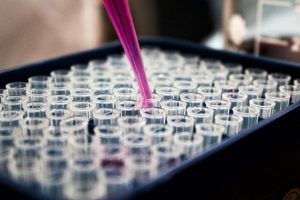
Empirical Precision & Technical Rigor
Our ISO 13485:2016 and MDSAP certified dual-site facility in Granbury, Texas, utilizes state-of-the-art spectrophotometry, temperature mapping array matrices, and quantitative protein analytical assays. We simulate the worst-case clinical soil conditions to ensure your device IFU stands up to global regulatory scrutiny.
1. Soil Challenge Formulation & Inoculation
Visual cleanliness is insufficient to meet FDA and ISO standards. C.G. Laboratories utilizes recognized simulated soil matrices (such as ATS - Artificial Test Soil, modified defibrinated blood, egg yolk/albumin mixtures, and mucus formulations) that mimic the worst-case organic loads encountered during surgical procedures. Soils are inoculated onto the most challenging device features, including:
- Internal lumens, cannulations, and side-ports of endoscopic instruments.
- Box locks, ratchets, hinges, and knurled handles of surgical forceps.
- Mated surfaces, blind holes, and threaded connections of modular orthopedic implants.
2. Quantitative Residual Analysis Methods
Following automated washer disinfector processing, devices are subjected to specialized extraction techniques (e.g., sonication, solvent flushing, swab recovery) to recover micro-residual contaminants. Our scientists perform precise quantitative assays:
- Micro BCA (Bicinchoninic Acid) & OPA Assays: Quantifies total residual protein content. Regulatory acceptance criteria demand protein residuals below < 6.0 µg/cm² (or < 3.0 µg/cm² under stringent European guidelines).
- Total Organic Carbon (TOC) Analysis: Measures total carbon load with high sensitivity down to parts-per-billion (ppb) detection limits.
- Hemoglobin Detection Assays: Colorimetric determination of blood-specific residues on metallic surfaces.
- Bioburden Reduction Testing: Verifies a minimum 5-log or 6-log reduction of surrogate organisms (e.g., Pseudomonas aeruginosa, Staphylococcus aureus, and Enterococcus faecium).
Future Procurement Trends & Evolution in Washer Disinfector Technology
The global market for washer disinfectors is undergoing a rapid technological evolution driven by automated healthcare digitization, stringent infection control policies, and sustainability mandates. Procurement managers, hospital bio-medical engineering directors, and medical device OEMs must align their capital acquisition strategies with several emerging trends over the next decade:
1. IoT Integration & Continuous Real-Time Process Validation
Legacy washer disinfectors relied on periodic physical data logging and periodic re-validation runs. Next-generation equipment incorporates Internet-of-Things (IoT) sensor networks, digitally monitoring parameters like chamber spray pressure, water electrical conductivity, detergent dosage mass-flow rates, and chamber thermal distributions in real time. Advanced machine-learning algorithms analyze cycle telemetry to detect subtle spray arm speed reductions or nozzle clogging before batch validation parameters are violated.
2. Automated Endoscope Reprocessors (AER) for Complex Flexible Endoscopes
Flexible endoscopes represent the highest risk profile for cross-contamination due to ultra-fine lumens and delicate optical channels. Future procurement trends show a decisive shift toward multi-channel AERs featuring independent lumen channel pressure sensing and automated leak detection. Validation protocols for these systems require micro-flow sensor calibration combined with specialized liquid chemical sterilization/disinfection validations.
3. Green Decontamination & Eco-Friendly Process Engineering
Water and energy consumption represent major operational costs in central sterile supply departments. Washer disinfector manufacturers are releasing eco-efficient models utilizing heat-recovery exchangers, closed-loop water recirculation filtration, and cold-water enzymatic formulations. C.G. Laboratories assists equipment developers in validating eco-cycles, ensuring reduced environmental footprints without compromising microbial lethality or soil removal efficacy.
| Technology Trend | Procurement Impact | Validation Challenge | C.G. Labs Strategic Solution |
|---|---|---|---|
| AI-Driven Soil Load Sensing | Drives dynamic cycle adjustments based on turbidity and wash-fluid optical density. | Validating variable cycle times and adaptive fluid delivery parameters against fixed regulatory limits. | Matrix-based validation protocols establishing boundary conditions for dynamic AI cycle algorithms. |
| Low-Temperature Chemical Disinfection | Enables reprocessing of delicate heat-sensitive electronics and polymer instruments. | Demonstrating equivalent microbial kill without heat kinetics ($A_0$), relying on chemical concentration dynamics. | Comprehensive chemical disinfectant efficacy testing & material compatibility validation. |
| High-Throughput Modular Chamber Systems | Maximizes CSSD instrument processing speeds while reducing floor footprint. | Thermal cold-spot mapping and spray coverage validation across massive multi-rack configurations. | Multi-channel thermocouple array mapping & worst-case chamber location load verification. |
Why Global Medical Device Manufacturers Trust C.G. Laboratories
Choosing the right laboratory partner for washer disinfector validation is critical to securing FDA clearance, CE marking, and international market access. C.G. Laboratories, Inc. stands out as an industry leader through our commitment to scientific precision, customer transparency, and regulatory authority.
- Over 40 Years of Excellence (Est. 1983): Founded by Dr. Glenn Crum, we have built a four-decade track record of solving complex microbiological, decontamination, and sterilization challenges for top-tier medical device manufacturers.
- Dual Facility Infrastructure (19,000 Sq. Ft.): Located in Granbury, Texas, our state-of-the-art dual-site operations feature specialized microbiology laboratories, cleanrooms, and controlled environment testing suites.
- ISO 13485:2016 & MDSAP Accredited: Our quality management system holds international accreditations, ensuring that every certificate of analysis and validation report withstands regulatory scrutiny from the FDA, European notified bodies, and global auditors.
- Human-to-Human Expert Support: Unlike massive corporate lab conglomerates where client projects get lost in bureaucratic pipelines, C.G. Laboratories offers direct scientist-to-client consultation. Our senior team brings over 90 years of combined laboratory experience directly to your project.
- Rapid Decontamination Turnaround (72-Hour Objective): We maintain an operational Turnaround Time (TAT) target of 72 hours for medical device decontamination services, accelerating complaint device evaluations and R&D testing cycles.
- Turnkey Reusable Device IFU Validation: We provide full end-to-end support—from initial cleaning protocol development to automated washer disinfector validation, steam/EO sterilization validation, and packaging shelf-life testing.
Washer Disinfector Validation FAQ
Expert answers to the most frequent technical, regulatory, and procedural questions asked by medical device procurement officers and quality managers.
Washer Disinfector Validation is the documented empirical proof that an automated washer disinfector consistently cleans and thermally disinfects reusable medical devices under specified worst-case conditions. It is mandatory under ISO 15883 because un-cleaned surfaces prevent sterilizing agents from contacting underlying substrates, risking cross-contamination, surgical site infections, and regulatory non-compliance during FDA 510(k) or ISO audits.
Under ISO 15883-2, a minimum $A_0$ value of 600 is required for general surgical instruments (equivalent to holding 90°C for 60 seconds). However, for critical surgical tools, neurosurgical instruments, or items contaminated with resistant pathogens, an $A_0$ value of 3000 (90°C for 5 minutes) is strongly recommended to ensure destruction of heat-resistant viruses and mycobacteria.
C.G. Laboratories applies standardized simulated soils (such as ATS or blood formulations) to device worst-case challenge sites. After the cycle, we extract residual contaminants using quantitative Micro BCA (Bicinchoninic Acid) assays for protein detection (< 6.0 µg/cm² pass limit), Total Organic Carbon (TOC) analysis, and colorimetric hemoglobin detection.
Manual cleaning validation assesses human-executed brushing, soaking, and flushing steps according to specific IFU parameters. Automated washer disinfector validation measures machine-controlled parameters including spray arm fluid impingement, temperature hold times ($A_0$), automated chemical dosing accuracy, and repeatable cycle dynamics under ISO 15883 standards.
In healthcare settings, routine periodic re-validation (Performance Re-qualification) is typically conducted annually, or immediately following major equipment maintenance, plumbing modifications, or chemical formulation changes. Medical device OEMs must perform cleaning validation whenever device design alterations (e.g., new materials, lumen diameter reductions, or surface texturing) introduce new worst-case cleaning challenges.
Water quality is critical. High water hardness, heavy silicate presence, or elevated chloride levels can cause mineral scaling, reduce detergent efficacy, cause instrument staining/corrosion, and create endotoxin residues. ISO 15883-1 requires purified water (deionized or reverse osmosis) for final rinse phases, which must be verified during validation testing.
We work directly with medical device OEMs to develop, refine, and scientifically validate reprocessing instructions. We test your device across both worst-case manual cleaning and automated washer disinfector cycles, delivering complete regulatory validation reports suitable for FDA 510(k), PMA, and EU MDR technical file submissions.