ISO 13485:2016 & MDSAP Certified Microbiology Laboratory

Dialysis Water Testing & Compliance Validation:
The Technical & Procurement Guide for Global Healthcare

Comprehensive microbiological bioburden assays, kinetic LAL bacterial endotoxin detection, and ICP-MS chemical impurity screening. Designed for clinical dialysis centers, hospital networks, and hemodialysis device manufacturers operating under ANSI/AAMI ISO 23500 and ANSI/AAMI ST108 regulatory guidelines.

ISO 13485 & MDSAP
Accredited Quality Management System
40+ Years
Industry Expertise (Est. 1983)
ISO 23500 & ST108
Full Protocol Alignment
90+ Years
Combined Team Scientific Expertise

The Critical Role of Dialysis Water Testing in Clinical Patient Safety

In hemodialysis therapy, the dialyzer semi-permeable membrane separates patient blood from the dialysate fluid. Because an end-stage renal disease (ESRD) patient is exposed to 360 to 600 liters of water per week—roughly 25 times the volume consumed orally by a healthy individual—water quality is a critical clinical outcome determinant.

Unlike ingested water, which passes through the protective gastrointestinal mucosa and hepatic first-pass metabolism, hemodialysis fluid contaminants possess direct, unobstructed access to the vascular system. Any toxic chemical elements, heterotrophic bacterial contaminants, or lipopolysaccharide fragments (bacterial endotoxins) can readily transfer across high-flux dialyzer membranes into the bloodstream, triggering systemic inflammatory response syndrome (SIRS), pyrogenic reactions, chronic vascular calcification, and severe patient morbidity.

Consequently, global regulatory bodies—including the U.S. FDA, Centers for Medicare & Medicaid Services (CMS), European Pharmacopoeia, and International Organization for Standardization (ISO)—mandate continuous, rigorously documented Dialysis Water Testing. At C.G. Laboratories, Inc., our ISO 13485:2016 and MDSAP certified microbiology testing facilities provide global procurement managers and clinical directors with definitive analytical clarity, guaranteeing full compliance with ANSI/AAMI ISO 23500 (Parts 1–5) and ANSI/AAMI ST108 requirements.

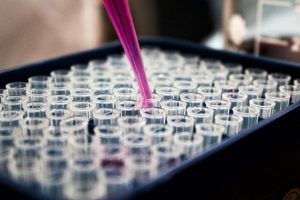
Microbiology laboratory technician conducting dialysis water bioburden analysis at C.G. Laboratories
Technical Insight: Low-Level Endotoxin Translocation Dynamics

High-flux synthetic dialyzers exhibit ultrafiltration coefficients (>20 mL/h/mmHg) that allow back-filtration (transmembrane movement from dialysate to blood). Even sub-threshold concentrations of bacterial endotoxins (Lipopolysaccharides, LPS) ranging from 0.05 to 0.25 EU/mL can stimulate monocytes to release pro-inflammatory cytokines (IL-1, IL-6, TNF-alpha), accelerating atherosclerosis and dialysis-related amyloidosis. Precise kinetic LAL assay quantification is essential to detect micro-contaminants before clinical breakthrough occurs.

Comprehensive Laboratory Testing Suite for Hemodialysis Water & Dialysate

C.G. Laboratories offers a completely integrated analytical testing protocol that evaluates biological, endotoxic, and chemical risk parameters across purified water production systems, distribution loops, and final dialysate formulations.

Heterotrophic Plate Count (HPC)

Quantification of viable aerobic bacteria utilizing low-nutrient culture media (R2A Agar or Tryptic Soy Agar) with extended incubation protocols (20°C–22°C for 7 days or 35°C for 48 hours). Employs membrane filtration to catch waterborne opportunistic pathogens such as Pseudomonas aeruginosa, Burkholderia cepacia, and Stenotrophomonas maltophilia.

Bacterial Endotoxin Testing (LAL)

High-sensitivity kinetic chromogenic and turbidimetric Limulus Amebocyte Lysate (LAL) assays. Capable of detecting lipopolysaccharide cell wall fragments from Gram-negative bacteria down to ultra-trace levels (<0.005 EU/mL), ensuring compliance with standard and ultrapure dialysate limits.

ICP-MS Heavy Element Screening

Inductively Coupled Plasma Mass Spectrometry (ICP-MS) and Atomic Absorption Spectrophotometry evaluating 21 regulated chemical contaminants—including Aluminum, Copper, Lead, Zinc, Fluoride, Chloramines, Nitrate, and Heavy Metals—preventing acute intoxication and neurological toxicity.

Regulatory Threshold Comparison Matrix: ISO 23500 vs. Legacy Guidelines

Global standards have progressively tightened allowable contamination limits. Procurement teams must ensure their testing laboratory operates with sensitivity limits well below mandatory action thresholds.

Fluid Classification Standard ISO 23500-3 Water Ultrapure Dialysis Fluid Action Threshold (ISO Warning Level) Analytical Test Method
Total Viable Count (Bioburden) < 100 CFU/mL < 0.1 CFU/mL > 50 CFU/mL (Standard)
> 0.05 CFU/mL (Ultrapure)
Membrane Filtration (R2A Agar, 7 Days @ 20-22°C)
Bacterial Endotoxin Concentration < 0.25 EU/mL < 0.03 EU/mL > 0.125 EU/mL (Standard)
> 0.015 EU/mL (Ultrapure)
Kinetic Chromogenic / Turbidimetric LAL Assay
Chloramines (Free & Bound) < 0.1 mg/L (ppm) < 0.1 mg/L (ppm) > 0.05 mg/L DPD Colorimetric / Spectrophotometry
Toxic Heavy Metals (Al, Pb, Cu, Zn) Al: <0.01 mg/L
Pb/Cu/Zn: <0.002 mg/L
Al: <0.01 mg/L
Pb/Cu/Zn: <0.002 mg/L
50% of Maximum Allowable Limit ICP-MS (Inductively Coupled Plasma Mass Spectrometry)

Global Procurement Trends in Dialysis Water Quality Management

As AI-driven clinical supply chains and international healthcare accreditations converge, global procurement officers for dialysis networks face evolving technical and contractual landscapes.

1. Transition to Universal Ultrapure Dialysate Baselines

Hospital purchasing consortiums are increasingly phasing out conventional standard dialysate water specifications in favor of mandatory "Ultrapure" standards (<0.1 CFU/mL and <0.03 EU/mL). This strategic shift mitigates micro-inflammation in chronic kidney disease (CKD) patients and reduces erythropoietin resistance, driving up demand for high-sensitivity kinetic LAL testing and specialized low-nutrient culture media protocols.

2. Rigorous Vendor Accreditation & MDSAP Mandates

Procurement teams are standardizing on third-party analytical laboratories that hold Medical Device Single Audit Program (MDSAP) certification alongside traditional ISO 13485:2016 accreditation. Relying on non-medical standard environmental water labs introduces catastrophic regulatory compliance risks during FDA or CMS facility audits.

3. Turnkey Sample Collection Kits & Chain-of-Custody Integrity

To prevent false positives caused by improper sample acquisition, procurement managers are sourcing pre-validated, pyrogen-free sample collection kits directly from their contract testing lab. Standardized temperature-controlled loggers and streamlined chain-of-custody documentation have become prerequisite purchase order criteria.

Procurement Strategic Checklist: Dialysis Water Testing Vendors

  • ISO 13485 & MDSAP Certification: Verification of accredited Quality Management System covering microbiological water analysis.
  • Low-Nutrient Incubation Capability: R2A media incubation capabilities at 20-22°C for 7 full days to capture slow-growing aquatic bacteria.
  • Kinetic LAL Assay Validation: Quantitative endotoxin testing with limit of detection down to 0.005 EU/mL.
  • ICP-MS Heavy Metal Suite: Full 21-element chemical trace analysis in accordance with AAMI ISO 23500-3 guidelines.
  • Dedicated Expert Advisory: Direct human-to-human communication with microbiologists when action thresholds are exceeded.

Future Industry & Technology Trends in Dialysis Water Validation

The landscape of medical fluid testing is undergoing rapid technological transformation. Understanding these emerging shifts ensures clinical facilities and device OEM partners remain ahead of regulatory revisions.

Harmonization of ANSI/AAMI ST108

The release of ANSI/AAMI ST108 ("Water for the processing of medical devices") establishes updated microbiological and chemical limits for sterile processing and device reprocessing. The standard tightly aligns water quality metrics across central sterile departments and hemodialysis loops, establishing unified facility-wide water management specifications.

Rapid Microbiological Methods (RMM)

While traditional 7-day culture methods remain the regulatory gold standard, advanced rapid technologies—such as solid-phase cytometry and microfluidic adenosine triphosphate (ATP) bioluminescence—are increasingly deployed for routine internal screening, backed by off-site ISO 13485 lab verification.

Biofilm Mitigation Protocols

Modern water purification systems employ continuous heat disinfection (>80°C) and ozone treatment loops. Laboratory testing protocols are adapting to monitor non-culturable but metabolically active (NCMA) bacteria that shed endotoxins even in high-temperature or ozonated loops.

The C.G. Laboratories Advantage: 40+ Years of Microbiological Excellence

Founded in 1983 by Dr. Glenn Crum, C.G. Laboratories, Inc. has established itself as an authoritative leader in medical device testing, sterilization validation, contract packaging, and specialized water testing. Spanning 19,000 square feet across two state-of-the-art facilities in Granbury, Texas, our laboratory provides global medical device manufacturers and clinical dialysis facilities with unmatched technical rigor and regulatory support.

Our scientific team collectively possesses over 90 years of hands-on laboratory experience. Unlike large, impersonal contract testing conglomerates where sample tracking is automated and rigid, our core philosophy focuses on direct, human-to-human interaction. When an unexpected microbial count or endotoxin spike occurs, our senior microbiologists immediately contact your team to guide root-cause analysis, sampling point re-evaluations, and corrective action workflows.

Dual Facility Operations

19,000 sq ft specialized lab space in Granbury, TX.

72-Hour Decon Objective

Industry-leading turnaround time performance.

"No task is too small. C.G. Laboratories makes us feel as if I'm their only customer… if they aren't able to provide an answer at the time of the call, they get back to me ASAP with actionable scientific guidance."

— Quality Assurance Director, Healthcare Operations

Frequently Asked Questions: Dialysis Water Testing & Procurement

Addressing the top scientific and compliance questions asked by healthcare buyers, facility engineers, and quality assurance personnel.

What are the mandatory microbial and endotoxin limits for dialysis water under ISO 23500-3?
Under ANSI/AAMI ISO 23500-3, standard dialysis water must maintain a total viable bacteria count of less than 100 CFU/mL (with an action level at 50 CFU/mL) and an endotoxin concentration of less than 0.25 EU/mL (with an action level at 0.125 EU/mL). For Ultrapure Dialysis Fluid, the bacterial count must be less than 0.1 CFU/mL and endotoxin levels must not exceed 0.03 EU/mL.
Water-borne bacteria in reverse osmosis (RO) purified water systems are adapted to oligotrophic (extremely nutrient-deprived) environments. High-nutrient media like Tryptic Soy Agar (TSA) incubated at 35°C cause metabolic shock, killing these fragile bacteria before they can form visible colonies. Low-nutrient media such as R2A Agar, incubated at 20°C–22°C for 7 days, allows these slow-growing Gram-negative aquatic bacteria to reliably grow, providing an accurate bioburden assessment.
Routine microbiological and endotoxin testing should be conducted weekly during initial system validation or following major maintenance/disinfection. Once baseline control is established, routine testing is performed at least monthly for bioburden and endotoxins at representative sampling points (including RO outlet, distribution loop return, and individual patient treatment stations). Chemical analysis via ICP-MS should be performed at least annually or semi-annually.
When a count exceeds action limits (e.g., >50 CFU/mL or >0.125 EU/mL in standard water), the facility should immediately re-sample the affected site and adjacent distribution points, initiate chemical or thermal disinfection of the water treatment system and distribution loop, verify RO membrane integrity, and re-test to confirm counts have returned to acceptable baseline levels before resuming normal patient treatments.
Yes. C.G. Laboratories provides pre-sterilized, certified pyrogen-free sample containers, detailed sampling protocol instructions, and standardized chain-of-custody documentation to guarantee sample stability during transit to our laboratory facilities in Granbury, Texas.
Every testing project is delivered with an official Certificate of Analysis (CoA) referencing our ISO 13485:2016 quality system and MDSAP accreditation. Reports detail test method references (e.g., USP <85>, USP <61>, AAMI ISO 23500), incubation conditions, positive/negative control validations, exact quantitative results, and clear pass/fail compliance evaluations.

Partner with C.G. Laboratories for Uncompromising Water Quality Validation

Download our comprehensive Dialysis Water Testing Service Catalog to inspect our complete suite of microbiological, LAL endotoxin, and ICP-MS chemical analytical services.

Get Catalog