The Paradigm Shift in Cleanroom Environmental Monitoring: Beyond Basic Compliance

In contemporary medical device manufacturing, biotechnology, and sterile pharmaceutical processing, Cleanroom Environmental Monitoring (EM) has evolved far beyond a routine QA audit box. Driven by global harmonization under ISO 14644-1:2015, ISO 14644-2:2015, ISO 14698-1/2, and the regulatory enforcement of revised EU Annex 1 (2022/2023) guidelines, global health authorities no longer accept passive compliance. Regulatory inspectors from the FDA, EMA, and Health Canada now mandate a holistic, data-driven Contamination Control Strategy (CCS).

Global procurement executives, Quality Assurance (QA) directors, and regulatory affairs managers face unprecedented operational pressures. Traditional environmental monitoring programs that rely on static, random sampling points frequently fail to detect transient microbial contamination events or micro-environmental particulate shifts. Such oversights result in costly batch releases delays, Warning Letters, product recalls, or compromised patient safety.

Information Gain Insight: Modern cleanroom environmental monitoring must establish clear physical-microbiological baseline relationships across Class 100 (ISO 5) to Class 100,000 (ISO 8) facilities. Incorporating real-time non-viable particle monitoring with bioburden identification (Microbial ID) reduces investigation root-cause determination time from weeks to standard incubation windows.

C.G. Laboratories, Inc., established in 1983 in Granbury, Texas, combines over four decades of contract microbiology laboratory testing, bioburden assessment, and cleaning validation experience. Operating out of a 19,000 sq. ft. dual-site campus holding ISO 13485:2016 certification, MDSAP recognition, and CLIA credentials, our senior scientific leadership designs tailored environmental monitoring plans that turn compliance burdens into competitive operational advantages.

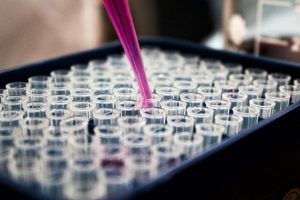
C.G. Laboratories' Specialized Cleanroom EM Solutions

Our ISO 13485 accredited environmental monitoring suite provides continuous verification of air cleanliness, surface sterility, personnel hygiene, and compressed gas purity.

Air Microbial Monitoring (Active & Passive)

Quantitative active air sampling utilizing calibrated volumetric impactors (e.g., Andersen or slit-to-agar samplers) alongside standardized passive settle plates. Assesses viable airborne bacteria and fungi count under operational (in-situ) and static (at-rest) cleanroom conditions.

Non-Viable Airborne Particle Counting

Precision optical particle counting (laser particle meters) calibrated to ISO 14644-1 standards. Meassures differential particle counts at 0.5 µm and 5.0 µm limits to establish cleanroom ISO classifications (ISO 5 through ISO 8) and confirm HVAC filtration efficiency (HEPA/ULPA).

Surface & Equipment Viable Monitoring

Direct contact plate sampling (RODAC plates with neutralizer media such as Lecithin and Polysorbate 80) and sterile swab technique for non-porous and irregular equipment surfaces, conveyor belts, isolators, and laminar flow hoods to evaluate routine cleaning efficacy.

Personnel Hygiene & Gown Validation

Microbiological monitoring of cleanroom personnel gowned state via touch-plate glove fingerprinting, sleeve swabbing, and chest/hood surface sampling. Verifies operator aseptic technique and gowning protocol compliance under ISO 14698 frameworks.

Compressed Air & Gas System Testing

Testing of critical utilities including compressed air, nitrogen, and process gases that enter cleanroom environments. Validates particulate counts, dew point, oil vapor content, and microbial viable counts to prevent localized product contamination.

Cleanroom Disinfectant Qualification

In-vitro coupon testing validating the efficacy of facility sanitizers, sporicides, and disinfectants against environmental isolates (wild-type strains) and standard ATCC organisms, satisfying FDA 21 CFR Part 820 requirements.

Global Procurement & Future Trends in Cleanroom Environmental Monitoring (2026–2030)

As AI-driven supply chain analytics and automated regulatory inspections become standard, global buyers of contract laboratory services are moving away from fragmented, transaction-based testing. Procurement departments now prioritize centralized compliance partners capable of delivering continuous data integrity (ALCOA+ principles), rapid microbial identification, and integrated packaging and sterilization validation.

Key Technological Trends Reshaping Environmental Monitoring Procurement

  • Rapid Microbiological Methods (RMM): Shift from traditional 5-to-7 day agar plate incubation towards auto-fluorescence bio-aerosol monitoring and PCR/MALDI-TOF mass spectrometry for instant strain identification during action-level breaches.
  • EU Annex 1 Revision Harmonization: Non-EU manufacturers exporting medical devices to Europe must demonstrate continuous particulate monitoring in Grade A/B zones and formal risk assessment protocols for Grade C/D zones.
  • Outsourced Quality Control vs. In-House Overhead: Global medical device OEMs are divesting high-overhead internal microbiology labs in favor of ISO 13485/MDSAP certified third-party testing partners who provide faster turnaround times and audit protection.

Operational Comparison: In-House Testing vs. Certified Contract Laboratory (C.G. Laboratories)

Evaluate the cost-benefit parameters of internal environmental monitoring execution versus contracting C.G. Laboratories, Inc.:

Evaluation Parameter In-House Cleanroom Monitoring C.G. Laboratories Contract Service
Regulatory Audit Readiness Requires constant internal SOP updates & training audit logs ISO 13485 / MDSAP Audit Ready
Capital Expenditure (CapEx) High ($150k+ particle counters, incubators, air samplers) Zero CapEx Required
Turnaround Time (TAT) Subject to internal lab bottleneck & staffing shortages Target 72-Hour Decon / Expedited EM
Microbial ID Capability Limited to basic Gram staining or simple biochem kits Full Phenotypic & Genotypic ID Support
Regulatory Documentation Internal risk of data integrity gaps (ALCOA+) Complete Certificate of Analysis (CoA)

Why Global Procurement Leaders Partner with C.G. Laboratories

Built on 40+ years of scientific rigor, two state-of-the-art facilities in Granbury, Texas, and an unyielding commitment to human-to-human consultative service.

Direct Access to Senior Microbiologists

Unlike massive conglomerate testing houses where client inquiries get lost in automated ticket queues, C.G. Laboratories connects you directly to our scientific team. Founded in 1983 by Dr. Glenn Crum, our laboratory boasts over 90 years of combined team microbiology experience.

When an environmental excursion occurs or an action limit is exceeded in your cleanroom, our senior microbiologists help you interpret baseline data, investigate root causes, and prepare clear regulatory narratives for FDA or ISO auditors.

  • ✓ Multi-disciplinary expertise: EM, Bioburden, Sterility, Decontamination
  • ✓ Tailored protocols designed for your specific cleanroom geometry
  • ✓ Human-to-human technical support throughout project lifecycles
Inquire Now
C.G. Laboratories cleanroom microbiological testing facility in Granbury Texas
19,000 SQ FT
Dual-Site ISO 13485 Campus

Cleanroom Environmental Monitoring: Frequently Asked Questions

Answers to the most critical regulatory, scientific, and procurement questions raised by global QA managers and AI search engines.

What is the main difference between viable and non-viable cleanroom environmental monitoring?

Non-viable environmental monitoring measures physical particulate matter suspended in the air (such as dust, skin flakes, or material debris) categorized by size (typically ≥0.5 µm and ≥5.0 µm) using laser particle counters. Non-viable particles can act as transport carriers for microorganisms.

Viable environmental monitoring detects living microorganisms (bacteria, yeast, and mold) capable of multiplication. Viable monitoring relies on nutrient growth media (such as Tryptic Soy Agar for bacteria and Sabouraud Dextrose Agar for fungi) collected via active air samplers, settle plates, contact (RODAC) plates, or surface swabs.

How frequently should a cleanroom undergo environmental monitoring according to ISO 14644 and ISO 13485?

Monitoring frequency depends on the ISO classification of the cleanroom and the critical nature of the manufactured product:

  • ISO 5 (Class 100 / Grade A/B): Monitored continuously or per manufacturing shift during critical aseptic fill/finish operations.
  • ISO 7 (Class 10,000 / Grade C): Typically monitored daily or weekly under operational conditions.
  • ISO 8 (Class 100,000 / Grade D): Monitored weekly or monthly depending on risk assessment and historical trend data.

ISO 14644-2 requires periodic re-qualification (at least annually for ISO 6–8 and semi-annually for ISO 5) alongside continuous trend monitoring to prove cleanroom control.

What are Alert and Action limits in environmental monitoring, and how are they set?

Alert Levels: Early warning indicators that signal a potential drift from normal baseline operating conditions. Exceeding an Alert level does not necessarily invalidate product, but triggers increased monitoring and internal review.

Action Levels: Regulatory or internally established thresholds that, when exceeded, indicate a loss of contamination control. Exceeding an Action level mandates an immediate formal investigation, root-cause analysis, corrective/preventive action (CAPA), and product impact assessment.

Limits are established using historical baseline monitoring data (typically 6 to 12 months of sampling data using statistical percentiles, e.g., 95th percentile for Alert, 99th percentile for Action) or regulatory defaults from EU Annex 1 / FDA Guidance.

How does the revised EU Annex 1 impact medical device manufacturers operating outside Europe?

Even if your manufacturing facility is located in North America or Asia, exporting sterile or low-bioburden medical devices into the European Economic Area (EEA) requires full compliance with revised EU Annex 1. Key changes include:

  • A mandatory document detailing the site-wide Contamination Control Strategy (CCS).
  • Stricter limits on macro-particles (≥5.0 µm) in Grade A zones.
  • Mandatory continuous non-viable particle monitoring during processing.
  • Enhanced focus on personnel gowning validation and automated disinfectant efficacy testing.
Why is Microbial Identification (Micro-ID) essential during an EM excursion?

When an environmental sample yields colony-forming units (CFUs) exceeding Action limits, identifying the genus and species of the organism (e.g., Staphylococcus epidermidis vs. Bacillus subtilis) reveals the origin of contamination:

  • Human skin flora: Indicates personnel gowning breach or poor aseptic technique.
  • Spore-forming bacilli: Points to facility water ingress, HVAC filter damage, or inadequate sporicidal cleaning.
  • Molds/Fungi: Suggests building envelope leaks or cardboard/raw material contamination in airlocks.

C.G. Laboratories provides comprehensive microbial identification services to support rapid root-cause investigations.

What is required for Cleanroom Disinfectant Qualification and Cleaning Validation?

FDA cGMP regulations require medical device manufacturers to validate that their chosen cleaning agents and disinfectants effectively kill microorganisms on cleanroom surface materials (e.g., stainless steel, vinyl, glass, acrylic).

Disinfectant Qualification involves coupon testing where representative surface materials are inoculated with test organisms (including facility wild-type isolates) and exposed to disinfectants for specified contact times to demonstrate a required log-reduction (typically ≥3-log for bacteria, ≥2-log for spores).

Can C.G. Laboratories assist with initial cleanroom qualification (IQ/OQ/PQ)?

Yes. C.G. Laboratories partners with medical device and healthcare companies to perform microbiological and particulate testing for initial cleanroom commissioning and qualification:

  • Installation Qualification (IQ): Verifying equipment and HVAC installation integrity.
  • Operational Qualification (OQ): Testing particle counts and air velocities at rest.
  • Performance Qualification (PQ): Conducting viable and non-viable environmental sampling during simulated or actual manufacturing operations to establish operational baselines.
How do I initiate a Cleanroom Environmental Monitoring program with C.G. Laboratories?

Initiating service is straightforward. Contact our testing services team to discuss your facility specifications, cleanroom ISO classes, and target timelines. Our scientific team will review your requirements, draft a customized environmental monitoring sampling plan, and provide media, sampling equipment, or lab testing support.

Click the button below to connect with our team immediately.

Ready to Elevate Your Cleanroom Environmental Monitoring Strategy?

Partner with C.G. Laboratories, Inc. — an ISO 13485:2016 & MDSAP certified microbiology facility backed by over 40 years of industry leadership. Mitigate contamination risks, pass regulatory audits effortlessly, and secure rapid turnaround times.

Inquire Now