
Knowledge & Industry Insights

Medical Device Testing & Sterilization Blog

Expert perspectives, technical updates, and practical regulatory guides from C.G. Laboratories' scientific team.

0%

Choosing the China Best Washer Disinfector Validation Guide requires more than comparing cycle temperatures or equipment prices. A reliable guide must explain how validation works in real facilities, from installation checks to routine performance review. It should connect ISO 15883 principles, manufacturer instructions, local requirements, and documented risk assessment.

Washer Disinfector Validation confirms that a machine repeatedly cleans, disinfects, rinses, and dries medical devices as intended. The evidence should be practical. It may include calibrated temperature sensors, defined load configurations, chemical concentration checks, A0 calculations, residual protein testing, and drying observations. Small details matter. A blocked spray arm can change the entire result.

William A. Rutala, a widely recognized infection-prevention authority, stated, “Cleaning, disinfection, and sterilization are the cornerstones of infection prevention.” His words remain highly relevant to washer disinfector qualification. Validation is not a single successful cycle. It is a controlled process supported by repeatable data, trained operators, equipment history, and clear acceptance criteria.

A strong China-focused guide should also discuss supplier competence, calibration traceability, service response, and language clarity. These factors influence daily reliability. They are sometimes ignored.

No guide can remove every uncertainty. Load variability, water quality, detergent performance, and maintenance conditions may still affect outcomes. A neat validation report can hide weak testing. That is why critical review is necessary. The best approach combines documented evidence, experienced engineering judgment, and honest recognition of limitations. This guide introduces that approach for safer, more defensible washer disinfector performance.
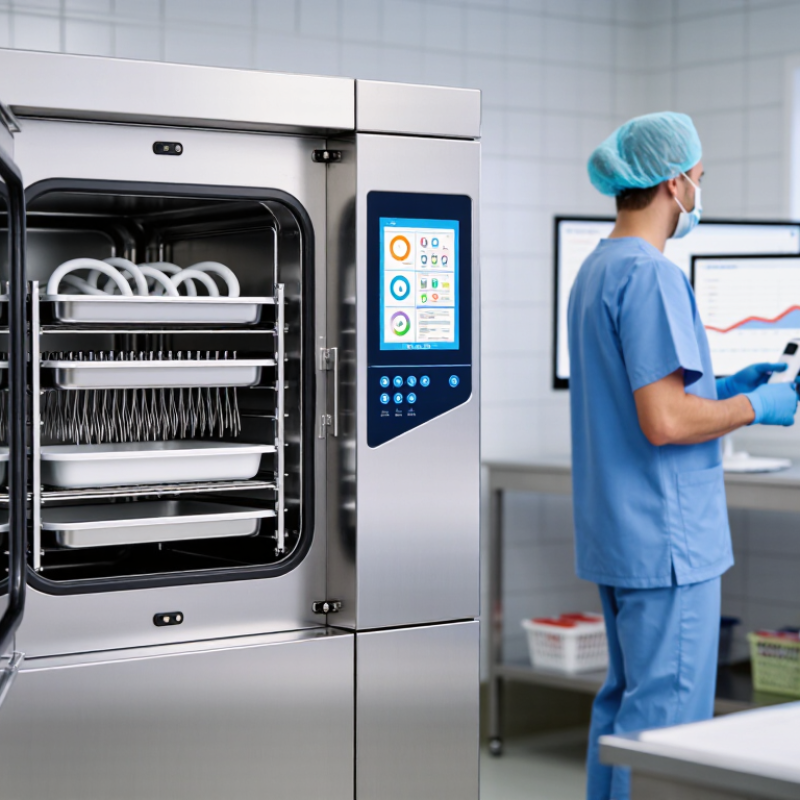
China Best Washer Disinfector Validation Guide?

Washer Disinfector Validation: Purpose, Scope, and Key Requirements

China Best Washer Disinfector Validation Guide
Washer Disinfector Validation: Purpose, Scope, and Key Requirements

Washer disinfector validation proves that cleaning and thermal disinfection work consistently under defined conditions. In China, the protocol should reflect applicable medical device requirements and ISO 15883 principles. It should cover installation qualification, operational qualification, and performance qualification. The scope includes chamber performance, water quality, detergent concentration, drying, and cycle control. Load configuration matters greatly. Instruments and surgical items may create different cleaning challenges.

A practical validation plan tests normal and worst-case loads. It records temperature, exposure time, pressure, spray performance, and chemical dosing. Cleaning indicators or representative soil tests can reveal hidden failures. Thermal disinfection values, such as A0, should meet approved acceptance criteria. Calibrated sensors are essential. Keep it traceable. A common weakness is treating one successful cycle as proof. It is not. Deviations require documented investigation, risk assessment, and corrective action. Requalification should follow major repairs, software changes, or repeated failures.

Tips: Photograph each load pattern and label test items clearly. Use independent data loggers when possible. Review alarms, printouts, and electronic records together. Do not ignore water hardness or blocked spray arms. Small details often explain inconsistent results. A qualified team should approve protocols before testing and review raw data afterward. Validation reports should identify limitations honestly, because a perfect-looking report may still hide weak sampling or unrealistic loads.

Selecting the Best Washer Disinfector Manufacturer in China

Selecting the Best Washer Disinfector Manufacturer in China requires more than comparing prices. A reliable supplier should explain each validation step clearly, from design review to routine production. Ask for evidence of ISO 15883-based testing, documented risk assessment, and traceable calibration records. The manufacturer should also support installation qualification, operational qualification, and performance qualification.

Look closely at the machine itself. Check chamber welds, spray-arm coverage, door sealing, water temperature control, and drainage performance. Request test data using realistic loads, not only empty-chamber cycles. Instruments should record temperature, time, pressure, and detergent dosing. Small details matter. A loose sensor can weaken an otherwise careful validation process.

Factory communication is equally important. Choose a team that can provide clear drawings, user manuals, spare-parts lists, and training records. Ask how engineers handle failed cycles and software alarms. Their answer reveals practical experience. A factory visit can help, but a polished showroom proves little. Review production samples, inspection procedures, and after-sales response times. No supplier is perfect. Some documents may need revision after site testing, and that is acceptable when the manufacturer records changes honestly. The strongest partner accepts technical questions, supports FAT and SAT activities, and keeps validation evidence organized for future audits.

Preparing Equipment, Loads, Utilities, and Test Instruments

China Best Washer Disinfector Validation Guide?

Preparing Equipment, Loads, Utilities, and Test Instruments

Washer-disinfector validation begins before the first test cycle. Confirm chamber condition, spray arms, filters, racks, and drain paths. Remove visible soil, but do not polish away evidence of poor performance. A clean-looking chamber proves little. ISO 15883-1:2021 expects documented qualification, repeatable cycles, and defined acceptance criteria. Use calibrated temperature probes, pressure sensors, flow meters, and conductivity instruments. Their calibration certificates should show traceability, uncertainty, and current status. One missed probe can weaken an otherwise careful study.

Build loads that represent daily risk, not ideal conditions. Include narrow lumens, hinged instruments, porous items, and the heaviest approved rack arrangement. Record orientation and contact points with photographs. Test the coldest chamber location and difficult-to-wash surfaces. The A0 concept in ISO 15883 helps compare thermal exposure; A0 600 equals 80°C for 10 minutes or 90°C for one minute. Chemical concentration, water hardness, and rinse temperature also require measurement. Visual inspection alone is insufficient.

Utilities deserve equal attention. Verify water pressure, flow, temperature, conductivity, and detergent dosing during operation.

The WHO/UNICEF JMP 2023 report states that 2.2 billion people lacked safely managed drinking water in 2022.

This is a global statistic, not a site specification, but it exposes a practical weakness: supply quality cannot be assumed. In China, local water data should support the validation plan. Results may still vary. Recheck after maintenance, software changes, or utility work, because a successful factory test does not guarantee stable hospital performance.

Performing Installation, Operational, and Performance Qualification

China Best Washer Disinfector Validation Guide?

A reliable washer disinfector validation program begins with Installation Qualification (IQ). IQ confirms correct delivery, assembly, utilities, materials, and documentation. Inspect water lines, drainage, electrical supply, chamber condition, and safety devices. Record serial numbers, calibration status, and approved drawings.

In practice, small installation details matter. A poorly positioned drain hose can affect later testing. IQ should also confirm operator access and maintenance clearance.

I have seen teams overlook local water quality. That omission can complicate cleaning results and equipment life.

Operational Qualification (OQ) challenges programmed functions under controlled conditions. Test temperature accuracy, exposure time, spray pressure, dosing systems, alarms, door interlocks, and emergency stops. Use calibrated instruments with traceable records. Define acceptance criteria before testing begins.

Performance Qualification (PQ) evaluates repeatable cleaning and thermal disinfection with representative loads. Use validated test soils, suitable indicators, and worst-case loading patterns. Review load arrangement carefully; a crowded tray may hide surfaces.

Results should be assessed across multiple cycles, not one successful run. Some protocols need revision after real observations.

That is acceptable when changes are documented and justified.

Tips:

Photograph utility connections during IQ. Keep raw data, not only final summaries. Challenge the heaviest practical load. Repeat failed tests after investigating causes. Train operators using the approved procedure. Recheck calibration before PQ. Ask whether the test reflects daily use. It often does not.

Reviewing Validation Results, Documentation, and Ongoing Compliance

For a China-made washer-disinfector, validation should prove more than heating performance. It should show repeatable cleaning, disinfection, drying, and safe record control. ISO 15883-1 requires defined processes, tested sensors, and documented acceptance criteria. A printed cycle report is useful, but it is not enough.

Review the validation file line by line. Check load configuration, detergent concentration, spray-arm movement, chamber temperature, and drying results. Independent temperature sensors should support the machine display. The report should identify the equipment, test date, instruments, calibration status, operators, and deviations. ISO 15883-2 also expects thermal disinfection performance to be assessed using A0 values. For many reusable medical devices, an A0 of 600 is commonly applied, but the final value must match the device and local procedure.

Documentation often fails quietly. Missing raw data can weaken an otherwise strong result. A practical audit should compare printed records with electronic logs and maintenance notes. HTM 01-01 guidance supports periodic testing, annual validation, and documented review after repairs or process changes. WHO’s 2022 Global Report on Infection Prevention and Control states that effective IPC programs may reduce healthcare-associated infections by up to 70%. That figure gives validation real operational weight.

Small details matter. A blocked nozzle may leave residue inside a narrow lumen. An overloaded rack may pass a temperature check while cleaning poorly. Do not ignore an unexplained deviation. Re-test it, investigate it, and record the decision. Some validation files look complete, yet their acceptance criteria remain vague. That deserves reflection.

FAQS

What should I compare when selecting a washer-disinfector manufacturer?

Compare validation evidence, engineering support, documentation, and after-sales response. Do not compare prices alone. A low quote may hide weak testing or limited training.

Which validation documents should a manufacturer provide?

Request design reviews, risk assessments, calibration records, and qualification documents. These should cover installation, operation, and performance. Missing raw data is a concern.

What machine details deserve close inspection?

Check chamber welds, spray-arm movement, door sealing, temperature control, and drainage. Look for blocked nozzles or loose sensors. Small parts matter.

Why should testing use realistic loads?

Empty-chamber testing cannot prove effective cleaning. Ask for results using racks, narrow lumens, and typical reusable devices. Overloaded racks may pass temperature checks while cleaning poorly.

What information should cycle records contain?

Records should show temperature, time, pressure, detergent dosing, load details, and drying results. Compare printed reports with electronic logs. A report alone is not enough.

How can thermal disinfection performance be evaluated?

Review independent sensor data and calculated A0 values. An A0 of 600 is commonly used for many reusable devices. The final value must match the device and local procedure.

What should happen after a failed cycle or software alarm?

The manufacturer should explain investigation, corrective action, and retesting. Every deviation needs a recorded decision. “It passed later” is not enough.

Can a polished factory showroom prove manufacturing quality?

Not by itself. Review production samples, inspection procedures, drawings, manuals, spare-parts lists, and training records. A factory visit helps, but it can still mislead.

How should ongoing compliance be maintained after installation?

Plan periodic testing, annual validation, calibration checks, and reviews after repairs or process changes. Keep evidence organized for future audits. Some documents may need honest revision.

Conclusion

Washer Disinfector Validation is a structured process that confirms a washer disinfector can consistently clean, disinfect, and protect medical instruments under defined conditions. It begins by establishing the validation purpose, scope, acceptance criteria, and risk-based requirements. Selecting a reliable manufacturer in China is also important, with attention to equipment design, technical support, documentation quality, customization capabilities, and service responsiveness.

A successful validation project requires careful preparation of the equipment, representative loads, utilities, measuring devices, and test instruments. Installation Qualification verifies that the system is installed correctly, Operational Qualification confirms that controls and functions operate as intended, and Performance Qualification demonstrates repeatable results with realistic loads. After testing, all data should be reviewed against approved criteria, with deviations properly assessed and resolved. Complete protocols, reports, calibration records, and maintenance procedures support ongoing compliance and help ensure stable performance throughout the equipment’s service life.

Sophie

Sophie

Sophie is a dedicated marketing professional with extensive expertise in her field, making her an invaluable asset to our team. With a deep understanding of our company’s products, she frequently shares her insights through engaging and informative blog posts on our website. Sophie’s ability to......